
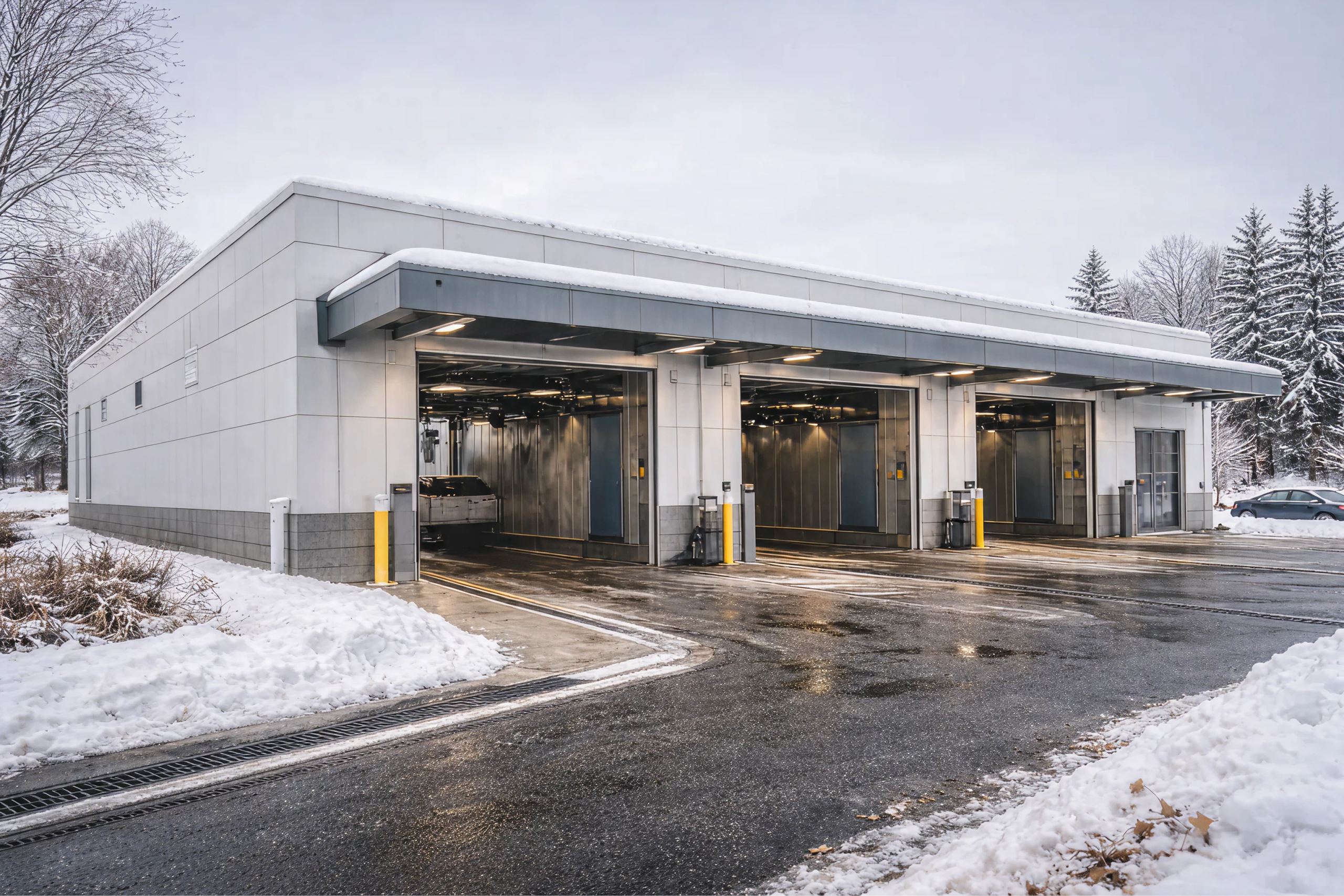

Designing a car wash in Canada requires a different approach than in milder climates. Extreme cold, freeze-thaw cycles, heavy snowfall, and road salt all place unique demands on equipment, building design, and site layout.
Facilities that are designed specifically for Canadian conditions operate more reliably, experience less downtime, and perform better year-round.
Cold Weather Resilience Starts at the Design Stage
Winter conditions are not an operational afterthought in Canada. They must be considered during initial planning and design.
Key design considerations include:
- Insulated buildings and mechanical rooms
- Properly enclosed wash bays
- Protection for exposed plumbing and equipment
Designing for cold from the start reduces the need for costly retrofits later.
Plumbing and Freeze Protection Are Critical
Frozen lines are one of the most common causes of winter downtime. Canadian car wash facilities must be designed with freeze prevention as a priority.
Effective strategies include:
- Heat tracing on water and chemical lines
- Proper pipe insulation and routing
- Sloped floors and drainage to prevent standing water
Thoughtful plumbing design protects equipment and keeps operations running in extreme temperatures.
Managing Snow, Ice, and Drainage
Snow accumulation and ice buildup can disrupt traffic flow and create safety risks. Site layout must account for snow storage and efficient drainage.
Design elements should include:
- Adequate snow storage areas
- Heated slabs in high-risk zones
- Drainage systems designed for freeze-thaw conditions
Good drainage helps prevent ice formation and improves site safety.
Equipment Selection for Canadian Conditions
Not all car wash equipment is built for cold climates. Selecting systems designed for Canadian winters improves reliability and performance.
Important equipment features include:
- Cold-rated motors and components
- Enclosed blowers and electronics
- Winter-appropriate chemical delivery systems
Choosing the right equipment reduces maintenance issues and extends lifespan.
Wind, Exposure, and Site Orientation
Wind exposure can significantly affect winter performance. Poorly oriented sites may experience excessive heat loss or snow drifting.
Design considerations include:
- Orienting wash entrances away from prevailing winds
- Using wind barriers or partial enclosures
- Protecting customer entry points
Small design choices can have a large impact on operating efficiency.
Salt, Corrosion, and Material Selection
Road salt accelerates corrosion on equipment and building materials. Selecting durable, corrosion-resistant materials is essential in Canadian markets.
Common solutions include:
- Stainless steel components
- Protective coatings on exposed metal
- Durable flooring and wall finishes
Investing in quality materials reduces long-term maintenance costs.
Lighting and Visibility During Shorter Days
Fall and winter bring reduced daylight hours. Adequate lighting improves safety, visibility, and customer confidence.
Design should include:
- Bright, energy-efficient LED lighting
- Well-lit entry, exit, and vacuum areas
- Clear signage visible in low-light conditions
Good lighting enhances both safety and customer experience.
Designing for Year-Round Demand
Canadian car washes often see strong winter demand due to road salt and slush. Facilities designed for cold climates can operate reliably during peak winter usage.
Designing for year-round performance supports consistent revenue and stronger returns.
Final Thoughts
Designing car wash facilities for Canadian climate conditions requires careful planning, specialized equipment, and climate-appropriate construction. Facilities that account for cold, snow, wind, and corrosion perform more reliably and deliver better long-term results.
Investors who design with Canadian conditions in mind reduce risk and protect their investment.
If you are planning a car wash project in Canada and want guidance on climate-resilient design, CCW Solutions works with investors to plan, design, and build facilities engineered for year-round performance.


