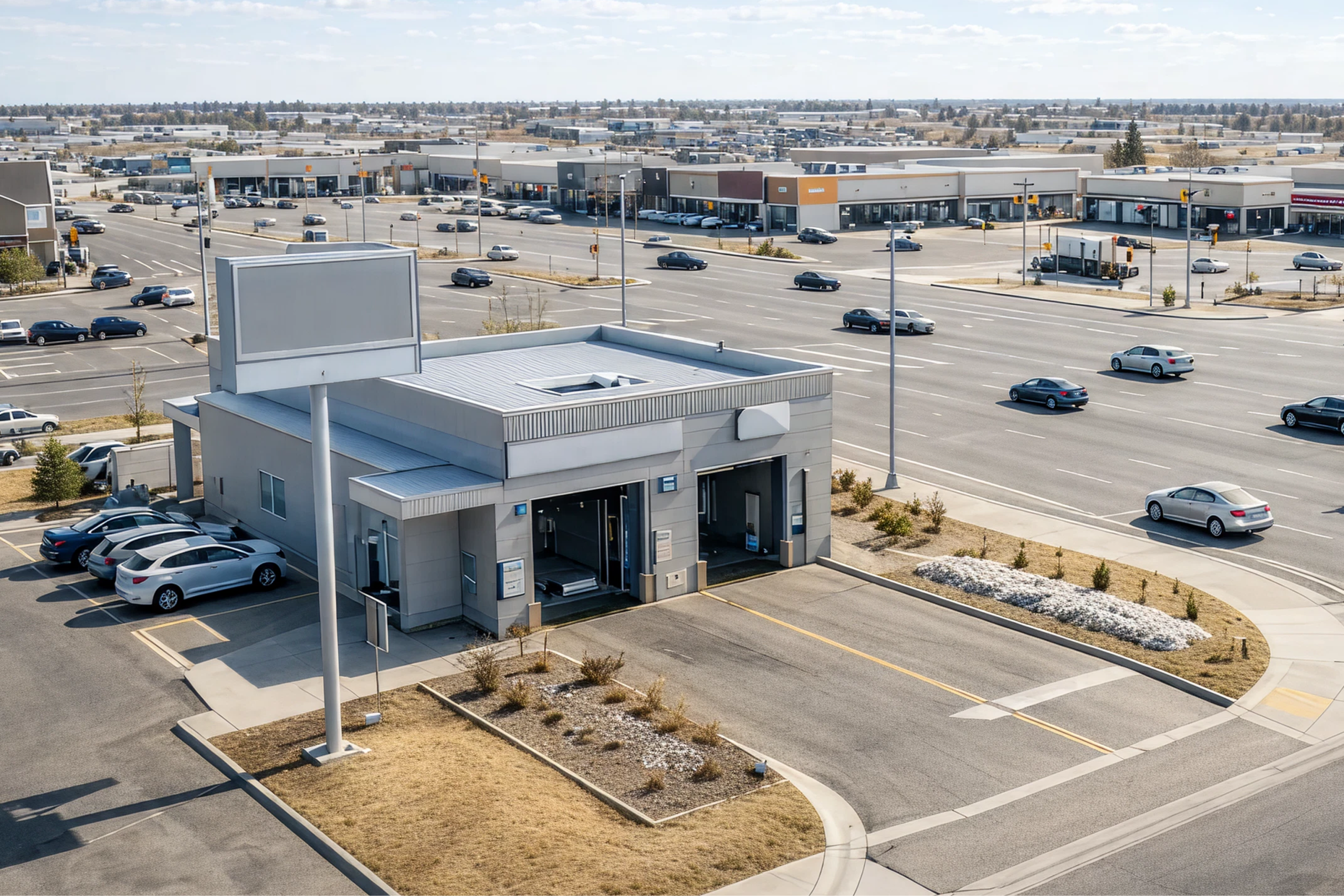

Location is one of the most important factors in the success of a car wash business. Even the best equipment and operations cannot compensate for a poorly chosen site. For investors, selecting the right location can significantly impact wash volume, revenue consistency, and long-term returns.
This article outlines the key factors to consider when choosing a car wash location and why site selection should be approached with care.
Traffic Volume and Visibility
A successful car wash depends on consistent vehicle flow. High traffic counts increase the likelihood of impulse visits and repeat usage.
Visibility is just as important as traffic volume. Sites that are easily seen from main roads, intersections, or commuter routes tend to perform better than those tucked away or partially hidden.
When evaluating a location, consider:
- Average daily traffic counts
- Direction of traffic flow
- Ease of noticing the site while driving
Convenience plays a major role in customer decision-making.
Access and Ingress/Egress
A location with strong traffic but poor access can still struggle. Customers should be able to enter and exit the site easily without complex turns or delays.
Important access considerations include:
- Right-in and right-out access
- Minimal interference with surrounding traffic
- Adequate space for vehicle stacking
Poor ingress and egress can lead to congestion, missed visits, and safety concerns.
Demographics and Local Market Fit
Understanding the surrounding population is critical. Income levels, vehicle ownership rates, and daily driving patterns all influence car wash demand.
Automatic car washes tend to perform better in areas with higher household incomes and busy commuters. Self-serve or hybrid models may be better suited to more price-sensitive markets.
Local competition should also be assessed to determine whether the market is underserved or already saturated.
Lot Size and Site Layout
Car wash sites require sufficient space to operate efficiently. Lot size affects the type of wash system that can be installed and how vehicles move through the site.
Key layout considerations include:
- Vehicle stacking capacity
- Wash tunnel or bay orientation
- Space for vacuums and pay stations
A poorly designed layout can reduce throughput and limit peak-hour performance.
Zoning, Permits, and Municipal Regulations
Zoning requirements vary by municipality and can impact timelines and costs. Some areas have restrictions related to water usage, noise, or environmental impact.
Before committing to a site, investors should confirm:
- Zoning compatibility for car wash use
- Permitting requirements and timelines
- Local environmental regulations
Early due diligence helps avoid delays and unexpected expenses.
Utility Capacity and Infrastructure
Car washes place significant demands on utilities. Adequate water pressure, drainage, and electrical capacity are essential for smooth operation.
Upgrading utilities can be costly, so it is important to evaluate existing infrastructure early in the site selection process.
Long-Term Growth and Development Plans
Investors should consider not only current conditions but also future development. Planned residential growth, road expansions, or commercial projects can increase traffic and demand over time.
Conversely, nearby construction or changes to traffic patterns can negatively affect access and visibility.
Final Thoughts
Choosing the right car wash location requires a balance of traffic, accessibility, demographics, and regulatory considerations. Site selection is not just about finding available land, but about understanding how customers interact with that location every day.
Investors who invest time and resources into proper site analysis are better positioned for long-term success.
If you are evaluating potential car wash sites and want guidance on feasibility, design, and development, CCW Solutions works with investors to identify locations that support strong performance from day one.