
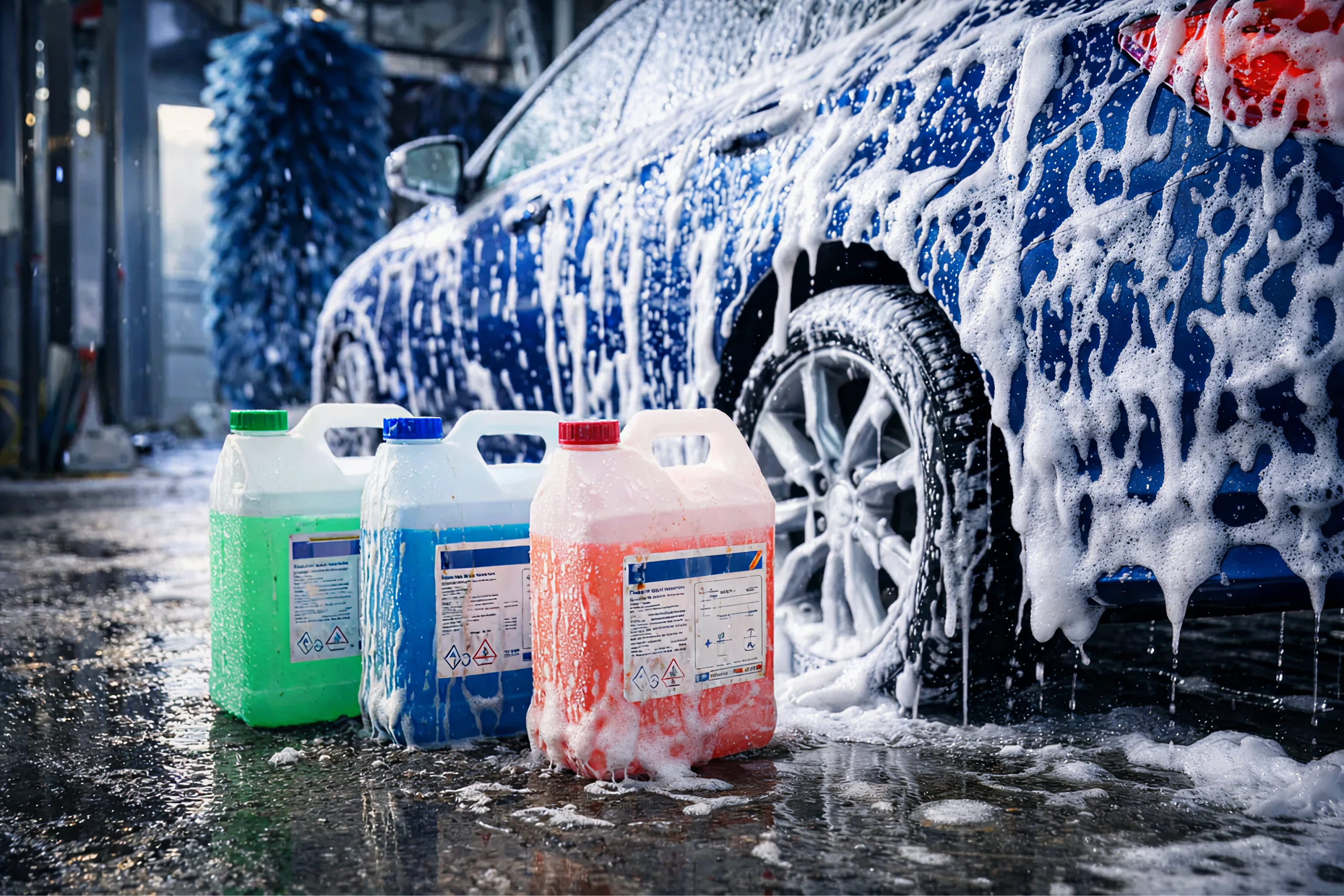

Car wash chemicals play a critical role in cleaning performance, equipment longevity, and operating efficiency. While equipment often gets most of the attention, chemical selection can significantly impact wash quality, customer satisfaction, and long-term costs.
Understanding how different chemicals work and how to apply them properly helps operators achieve consistent results across varying conditions.
The Role of Chemistry in the Wash Process
Car wash chemicals are designed to break down and remove different types of contaminants. Dirt, road film, grease, salt, and organic debris all require specific chemical action to be removed effectively.
The wash process typically relies on a combination of:
- Pre-soaks to loosen surface contaminants
- Detergents to lift and carry away dirt
- Specialty cleaners for wheels and undercarriages
- Drying agents to reduce water spotting
Each stage plays a role in overall wash performance.
Matching Chemicals to Local Conditions
No two markets are the same. Climate, water quality, and seasonal conditions all affect chemical performance.
For example:
- Canadian winter conditions require chemicals that perform well in cold temperatures
- Areas with heavy road salt need formulations designed to break down corrosive residue
- Regions with hard water may require adjusted chemical ratios
Using chemicals that are not suited to local conditions often leads to poor results and increased consumption.
Touchless vs Soft-Touch Chemical Requirements
Different wash systems place different demands on chemical performance.
Touchless systems rely heavily on chemistry to remove dirt without physical contact. This requires stronger, more precise formulations and accurate application.
Soft-touch systems use physical contact to assist cleaning, which allows for milder chemistry but still requires proper balance to protect vehicle surfaces and equipment.
Understanding system requirements helps prevent overuse or underperformance.
Importance of Proper Dilution and Application
Even high-quality chemicals can perform poorly if they are not applied correctly. Improper dilution is one of the most common causes of inconsistent wash results.
Operators should ensure:
- Accurate chemical metering and delivery
- Regular calibration of dispensing systems
- Consistent application across all wash cycles
Overuse increases cost and equipment wear, while underuse reduces cleaning effectiveness.
Impact on Equipment and Maintenance
Chemical selection directly affects equipment health. Aggressive or poorly balanced chemicals can accelerate corrosion, damage seals, and shorten equipment lifespan.
Using properly formulated products helps:
- Reduce buildup in reclaim systems
- Protect pumps, hoses, and fittings
- Minimize maintenance and repair costs
Balanced chemistry supports both performance and longevity.
Environmental and Regulatory Considerations
Many municipalities have regulations governing chemical discharge and environmental impact. Modern car wash chemicals are designed to meet these requirements while maintaining cleaning performance.
Selecting compliant products helps:
- Simplify permitting and inspections
- Reduce environmental risk
- Support sustainability initiatives
Compliance should be considered alongside performance and cost.
Monitoring Performance and Adjusting Over Time
Chemical performance should be monitored regularly. Changes in weather, water quality, or wash volume may require adjustments.
Best practices include:
- Tracking customer feedback
- Reviewing chemical usage rates
- Inspecting wash results consistently
Ongoing evaluation helps maintain optimal performance year-round.
Final Thoughts
Car wash chemical selection is not a one-time decision. It requires understanding local conditions, system requirements, and ongoing performance data.
Operators who take a proactive approach to chemistry achieve better wash results, lower operating costs, and longer equipment life.
If you are planning a new car wash or optimizing an existing operation, CCW Solutions works with owners and investors to select chemical programs that support reliable performance and long-term profitability.


