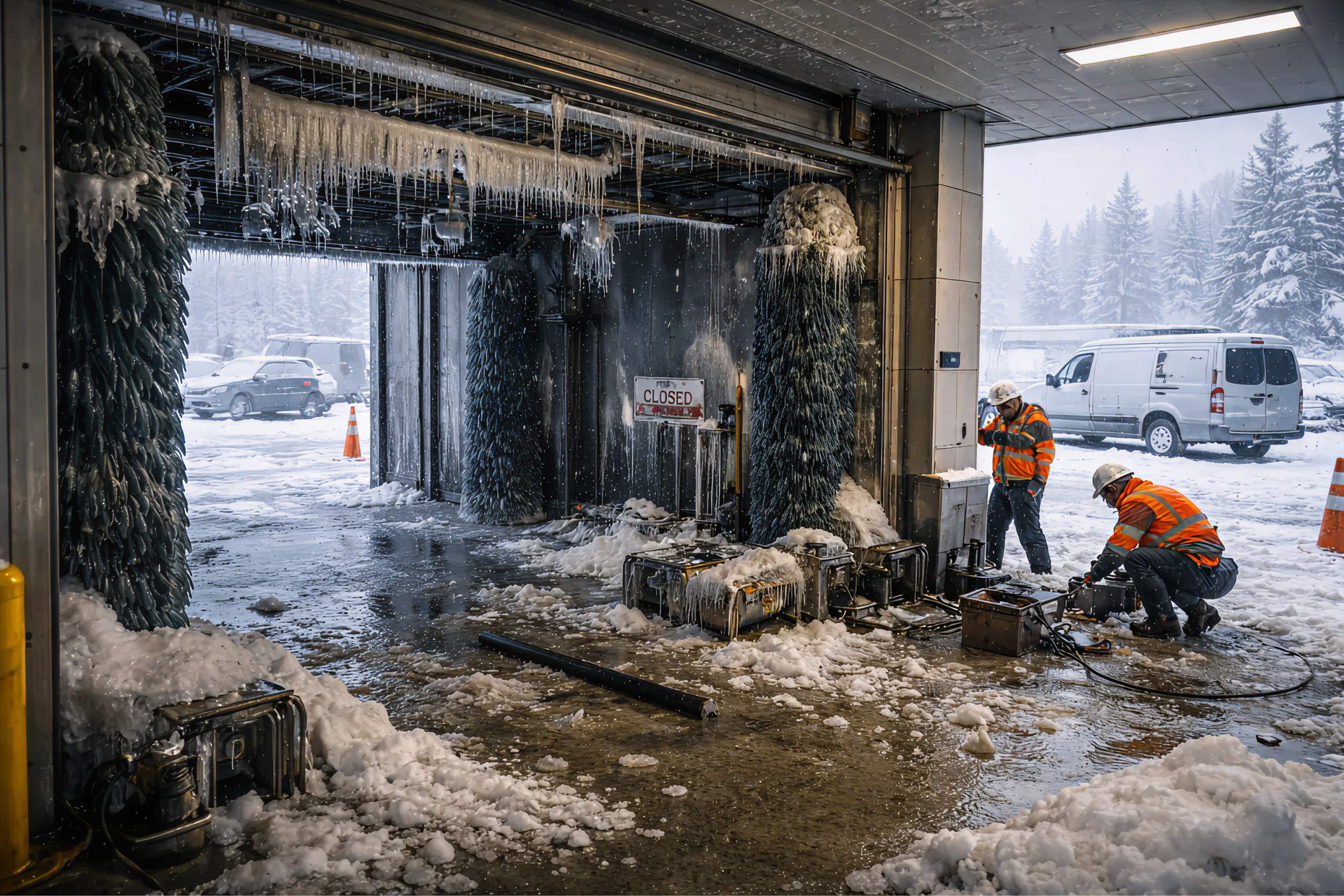

Canadian winters place unique demands on car wash equipment. Extreme cold, freeze-thaw cycles, snow, ice, and road salt all impact how systems perform. For operators and investors, understanding these effects is critical to maintaining uptime, controlling costs, and protecting long-term profitability.
Facilities designed and operated with winter conditions in mind perform more reliably and experience fewer disruptions.
Freezing Temperatures Increase Mechanical Stress
Cold temperatures affect materials, lubricants, and moving components. Motors, pumps, seals, and hoses are all subjected to increased stress when temperatures drop.
Common winter issues include:
- Stiff or brittle hoses and seals
- Reduced lubrication effectiveness
- Slower motor performance at startup
Without proper cold-rated components and maintenance, equipment wear accelerates during winter months.
Freeze-Thaw Cycles Create Operational Challenges
Frequent freeze-thaw cycles are common across much of Canada, especially in late fall and early spring. Water that freezes overnight and thaws during the day can cause expansion and contraction in plumbing and equipment.
This can lead to:
- Cracked fittings and valves
- Leaks in plumbing lines
- Sensor and flow irregularities
Designing systems with proper drainage and insulation helps reduce these risks.
Water Systems Are Especially Vulnerable
Water supply, reclaim systems, and drainage infrastructure are highly sensitive to winter conditions. Ice buildup can restrict flow and damage components.
Operators often see issues such as:
- Frozen supply or reclaim lines
- Reduced water pressure
- Blocked drains and sumps
Consistent monitoring and proper freeze protection are essential to keeping water systems operational.
Road Salt Accelerates Corrosion and Wear
Road salt is a major contributor to winter car wash demand, but it also increases equipment wear. Salt residue accelerates corrosion on metal components and can damage electrical connections if not properly protected.
Areas most affected include:
- Undercarriage wash components
- Exposed metal fittings
- Electrical enclosures and connectors
Using corrosion-resistant materials and protective coatings helps extend equipment lifespan.
Chemical Performance Changes in Cold Weather
Detergents and drying agents behave differently in low temperatures. Improper chemical selection or dilution can reduce cleaning effectiveness and increase residue.
Winter-specific chemical formulations help:
- Maintain cleaning performance
- Reduce freezing and spotting
- Protect equipment from buildup
Adjusting chemical programs seasonally is a key operational practice.
Increased Demand Raises Equipment Load
Winter often brings higher wash volumes due to snow, slush, and salt. Increased demand places additional strain on equipment already operating in harsh conditions.
Higher usage combined with cold stress increases the importance of preventative maintenance and real-time monitoring.
Downtime Is More Costly in Winter
Equipment failures during winter can lead to extended downtime due to service delays, weather conditions, or parts availability. Even short outages can result in significant lost revenue during peak demand periods.
Planning for winter resilience helps protect uptime and customer trust.
Final Thoughts
Canadian winter conditions have a direct impact on car wash equipment performance. Cold temperatures, freeze-thaw cycles, salt exposure, and increased demand all place added stress on systems.
Facilities designed for winter operation and supported by proactive maintenance perform more reliably and deliver stronger long-term results.
If you are operating or planning a car wash in Canada and want guidance on equipment selection, winter design, or maintenance strategies, CCW Solutions works with investors and operators to build and operate facilities engineered for Canadian conditions.