
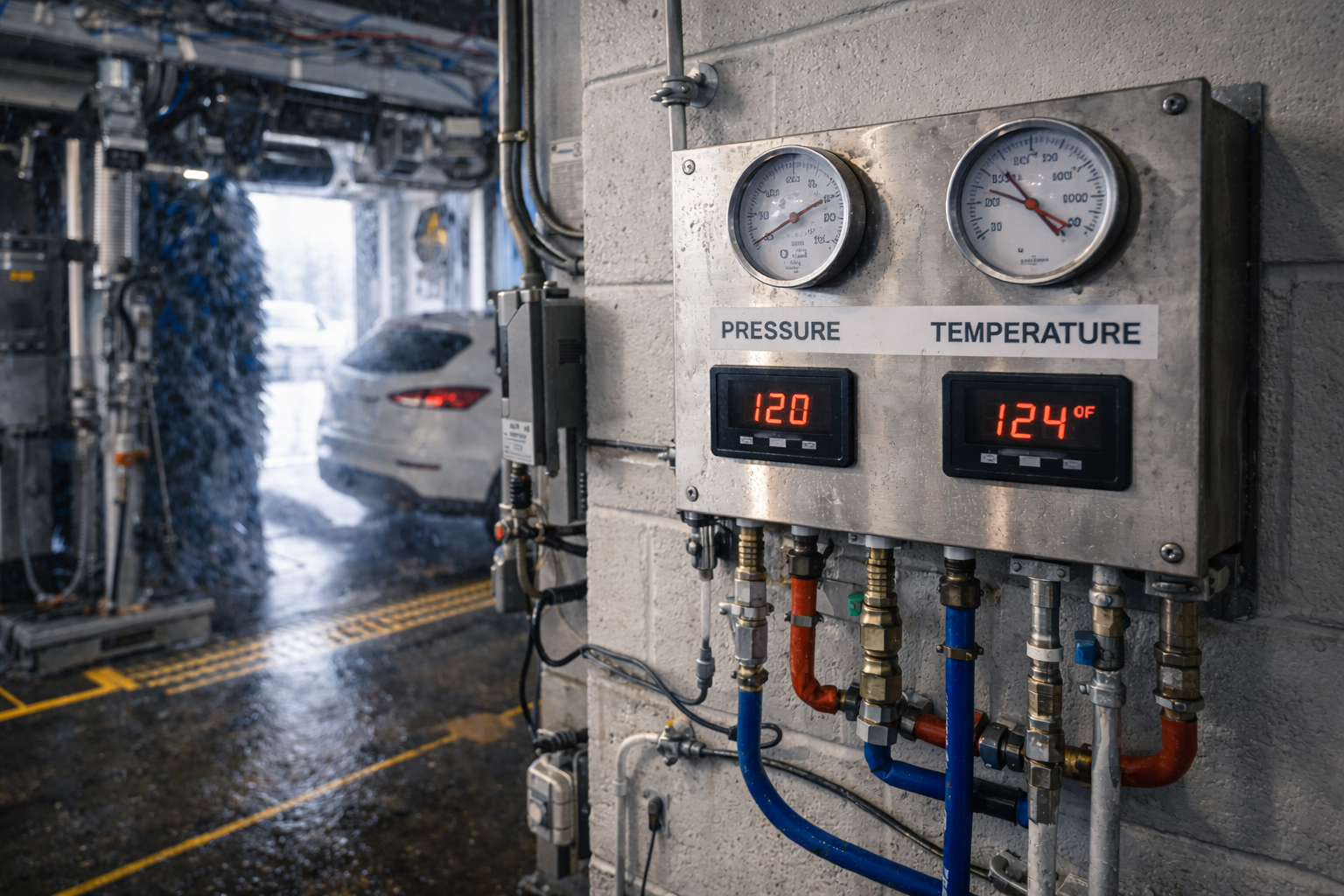

Water is the foundation of every car wash operation. While equipment and layout often get the most attention, water pressure, temperature, and quality have a direct impact on cleaning performance, equipment reliability, and operating costs.
Designing a car wash without properly accounting for these three factors often leads to inconsistent results and long-term issues that are difficult and expensive to fix.
Why Water Pressure Matters
Water pressure determines how effectively dirt, salt, and debris are removed from vehicle surfaces. Insufficient pressure reduces cleaning performance, while excessive pressure can damage equipment and vehicle finishes.
In car wash design, pressure must be:
- Consistent across all wash stages
- Properly matched to the selected equipment
- Adequate during peak demand periods
Pressure drops caused by undersized supply lines or insufficient pumping capacity often lead to poor wash results and customer complaints.
The Role of Water Temperature in Cleaning Performance
Water temperature plays a critical role in chemical activation and overall cleaning effectiveness. Warmer water improves the ability of detergents to break down grease, road film, and winter residue.
Key considerations include:
- Maintaining stable water temperature during high-volume periods
- Preventing excessive heat loss in cold climates
- Designing heating systems that match demand
In Canadian markets, proper water heating and insulation are essential to maintain performance during winter operation.
How Water Quality Affects Wash Results
Water quality varies significantly by region. Hard water, high mineral content, or contaminants can all affect wash appearance and equipment performance.
Poor water quality can cause:
- Spotting and streaking on vehicles
- Scale buildup in plumbing and equipment
- Reduced chemical effectiveness
Designing systems with appropriate filtration, softening, or treatment helps maintain consistent wash quality and protects equipment.
Interaction Between Pressure, Temperature, and Chemistry
These three factors work together. Even the best equipment cannot compensate for poor balance between pressure, temperature, and chemistry.
Examples include:
- High pressure with cold water reducing chemical effectiveness
- Proper temperature but inconsistent pressure causing uneven cleaning
- Untreated hard water interfering with detergents and drying agents
Balanced system design ensures all components support each other.
Impact on Equipment Longevity and Maintenance
Improper water conditions accelerate wear on pumps, valves, seals, and heating systems. Scale buildup and pressure fluctuations increase maintenance needs and reduce equipment lifespan.
Designing water systems correctly helps:
- Reduce breakdowns
- Lower maintenance costs
- Improve long-term reliability
This directly impacts uptime and profitability.
Designing for Peak Demand and Seasonal Conditions
Water systems must be sized for peak usage, not average demand. Spring and winter often bring high wash volumes that stress underdesigned systems.
Cold weather adds additional challenges, including freeze protection and temperature stability. Canadian car washes must be designed with these seasonal extremes in mind.
Final Thoughts
Water pressure, temperature, and quality are critical design considerations that directly influence wash performance, customer satisfaction, and operating costs. Overlooking these elements during design often leads to long-term operational challenges.
Car washes designed with proper water systems perform more consistently, require less maintenance, and deliver better results year-round.
If you are planning a new car wash or upgrading an existing facility, CCW Solutions works with owners and investors to design water systems that support reliable performance and long-term profitability.
Add CCWS as a Preferred Google Source to prioritize our insights.


