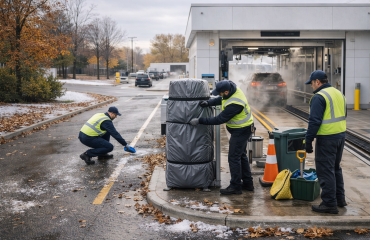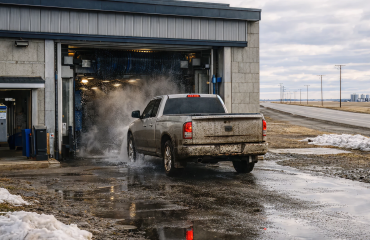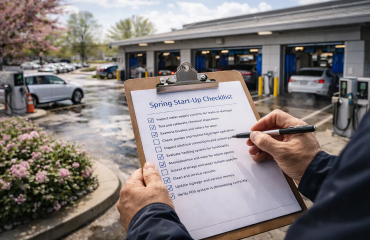

Spring is one of the most important periods for car wash operators. After months of winter operation, equipment has been exposed to cold temperatures, road salt, and heavy usage. A proper spring start-up helps restore performance, prevent breakdowns, and prepare the site for increased demand.
A structured checklist allows operators to transition smoothly into the busy spring and summer seasons.
Inspect Wash Equipment for Winter Wear
Winter conditions accelerate wear on moving components. Begin spring start-up by inspecting all core wash equipment.
Key areas to review include:
- Pumps, motors, and drive systems
- Bearings, belts, and seals
- Wash arches, brushes, or spray nozzles
- Dryers and blowers
Addressing worn components early helps prevent unexpected downtime during peak demand.
Service Water and Reclamation Systems
Water systems often carry the greatest winter impact. Debris, salt, and sediment can reduce efficiency if not addressed.
Spring service should include:
- Cleaning reclaim tanks and filters
- Inspecting oil and grit separators
- Checking water pressure and flow rates
- Flushing lines where necessary
Clean systems improve wash quality and reduce strain on equipment.
Check Plumbing and Drainage
Freeze-thaw cycles can cause cracks, leaks, or blockages. Thoroughly inspect plumbing and drainage before demand increases.
Look for:
- Leaks in hoses, valves, and fittings
- Proper slope and drainage in wash bays
- Standing water or ice-prone areas
Correcting drainage issues improves safety and performance.
Review Chemical Systems and Adjust for Warmer Weather
Chemical performance requirements change as temperatures rise. Winter formulations may need adjustment for spring and summer conditions.
Operators should:
- Review chemical types and ratios
- Calibrate dispensing systems
- Monitor cleaning performance closely
Proper chemical setup improves results and controls costs.
Inspect Electrical and Control Systems
Winter moisture and temperature swings can affect electrical components.
Spring inspection should include:
- Control panels and enclosures
- Sensors and safety switches
- Wiring connections and terminals
Ensuring clean, dry, and secure connections reduces the risk of mid-season failures.
Test Payment and Access Systems
Spring demand increases transaction volume. Payment systems should be tested to ensure reliability.
Verify:
- Card readers and kiosks
- Membership and access systems
- Reporting accuracy
Resolving issues early helps maintain throughput during busy periods.
Assess Site Conditions and Appearance
Spring is a good time to refresh the overall site.
Walk the property and look for:
- Cracked concrete or damaged curbs
- Worn signage or faded markings
- Lighting issues
Improving site appearance enhances safety and customer experience.
Restock Supplies and Spare Parts
Higher wash volume increases wear. Ensure critical supplies and parts are available.
Recommended items include:
- Common wear components
- Hoses, fittings, and seals
- Chemical inventory
Prepared operators recover faster from minor issues.
Update Maintenance Plans and Schedules
Use spring start-up as an opportunity to review maintenance practices.
Actions may include:
- Updating preventative maintenance schedules
- Reviewing recurring winter issues
- Planning upcoming service work
Proactive planning supports reliable operations through the peak season.
Final Thoughts
Spring start-up is a critical step in transitioning from winter operation to peak demand. Facilities that take a proactive approach reduce downtime, improve wash quality, and protect revenue.
For car wash owners and investors, a strong spring start-up sets the tone for the entire year.
If you are preparing a car wash for the spring season or planning upgrades ahead of peak demand, CCW Solutions works with owners and operators to design, maintain, and optimize facilities for year-round performance.
Add CCWS as a Preferred Google Source to prioritize our insights.