
Choosing the right wash system is one of the most important decisions when building or upgrading a car wash. Two of the most common options are touchless and soft-touch systems. Each approach has advantages and drawbacks, and the right choice depends on customer expectations, site conditions, and long-term operating goals.
Understanding how these systems differ helps investors and operators make informed decisions.
What Is a Touchless Car Wash System?
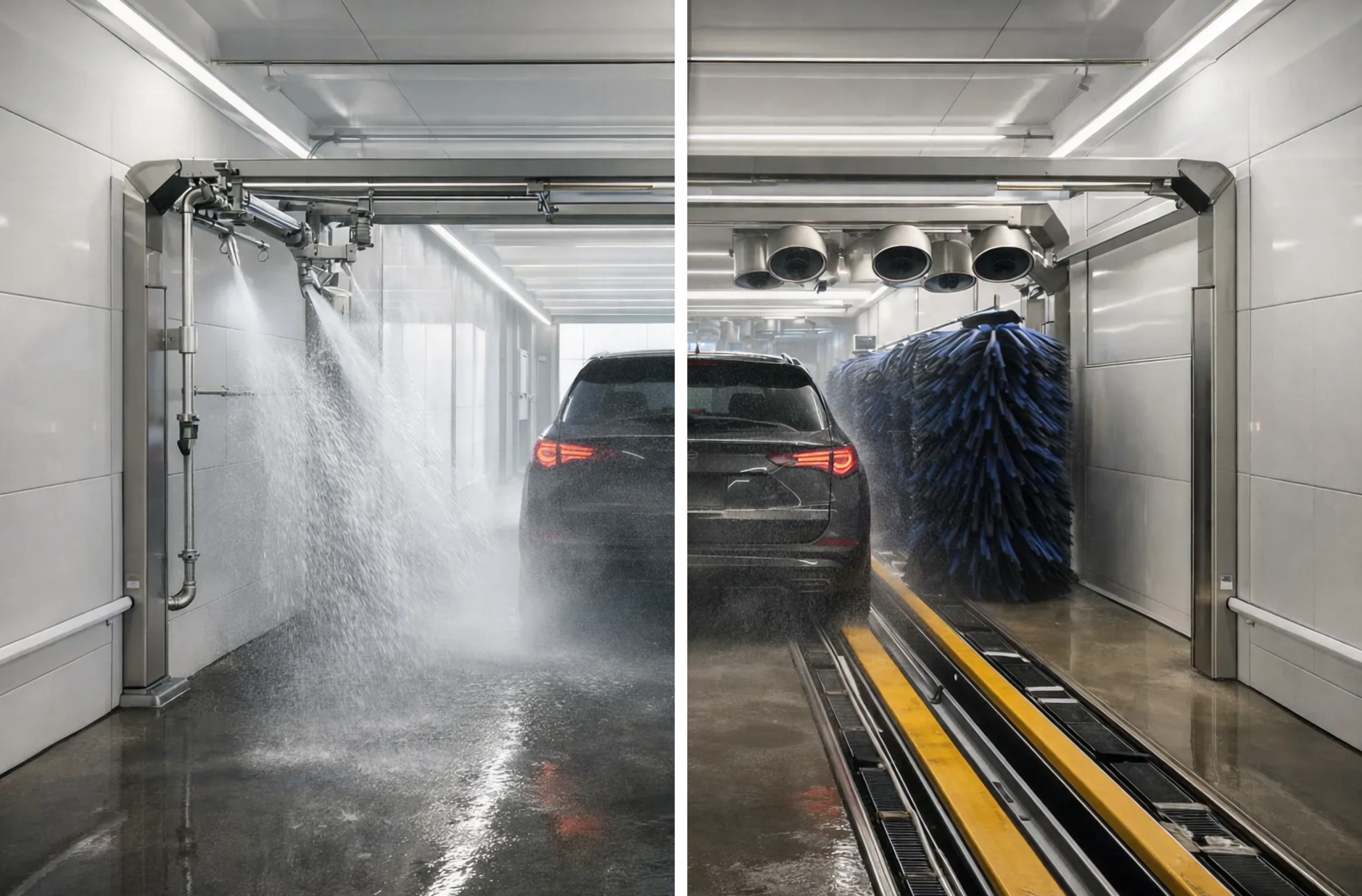
Touchless systems clean vehicles using high-pressure water and specialized detergents without physical contact. No brushes or cloth materials touch the vehicle surface during the wash.
Pros of Touchless Systems
Touchless washes appeal to customers who are concerned about potential paint damage or scratches. Because there is no physical contact, many drivers perceive these systems as safer for their vehicles.
Other advantages include:
- Lower risk of surface damage claims
- Reduced wear on moving parts
- Simpler maintenance in some environments
- Strong performance in winter conditions
Touchless systems can be particularly effective in areas with heavy mud, salt, or debris buildup.
Cons of Touchless Systems
While convenient, touchless systems may struggle with heavily soiled vehicles. Stubborn grime can sometimes remain, leading to lower perceived wash quality for some customers.
Additional drawbacks include:
- Higher water and chemical usage
- Longer wash cycles in some cases
- Potentially lower customer satisfaction without proper chemistry
Operators must carefully balance pressure and detergents to maintain consistent results.
What Is a Soft-Touch Car Wash System?
Soft-touch systems use cloth or foam brushes that physically contact the vehicle to remove dirt and debris. These systems are common in tunnel washes and modern in-bay automatics.
Pros of Soft-Touch Systems
Physical contact allows soft-touch systems to provide a more thorough clean, especially for vehicles with heavy buildup.
Key benefits include:
- Superior cleaning performance
- Faster wash times
- Lower water and chemical consumption
- Higher customer satisfaction when properly maintained
Soft-touch systems often deliver a visibly cleaner result, which can drive repeat business.
Cons of Soft-Touch Systems
The primary concern with soft-touch systems is perceived risk of paint damage. While modern materials are designed to be vehicle-safe, some customers remain hesitant.
Other considerations include:
- More frequent maintenance of cloth components
- Higher replacement costs for wear items
- Greater sensitivity to debris management
Proper maintenance and regular inspection are critical to minimizing risks.
Choosing the Right System for Your Market
The decision between touchless and soft-touch should be guided by local customer preferences and operating conditions.
Touchless systems often work well in:
- Cold climates with heavy winter grime
- Markets with high concern over vehicle finishes
- Locations with limited space or lower throughput needs
Soft-touch systems are often better suited for:
- High-volume locations
- Markets focused on speed and wash quality
- Sites with strong membership programs
Some operators choose hybrid solutions that offer both options, allowing customers to select their preferred wash type.
Operational and Investment Considerations
Beyond customer preference, investors should consider:
- Maintenance and replacement costs
- Water and chemical consumption
- Equipment lifespan and downtime
- Long-term scalability
Each system has different cost structures that affect overall profitability.
Final Thoughts
Touchless and soft-touch car wash systems each have clear advantages and trade-offs. There is no universally correct choice. The most successful operators select systems that align with their market, customer expectations, and operational strategy.
A well-designed car wash can perform strongly with either approach when paired with proper site design, maintenance, and management.
If you are evaluating wash system options and want guidance on selecting the right technology for your project, CCW Solutions works with investors to assess, design, and build car wash facilities tailored to their market.